
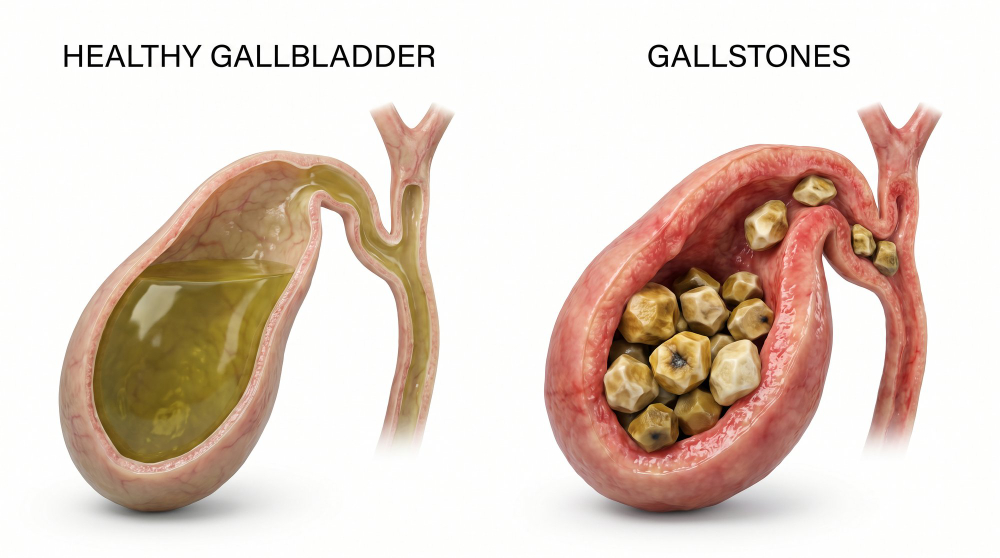
What Are Gallstones?
Gallstones are small, hard pieces that form in the gallbladder. The gallbladder is a small organ under your liver. It stores bile, which helps digest fat. Sometimes, bile can form stones. These stones can cause pain or other problems. Many people hear about gallstones surgery when these stones block the flow of bile. Although some people never feel symptoms, others may need treatment.
Common Symptoms of Gallstones
Not everyone with gallstones feels sick. However, some signs you need gallbladder surgery or treatment include:
For example, if pain lasts for hours or comes with fever, you should see a doctor. Early care can help prevent serious problems.
Causes and Risk Factors
Gallstones form when the balance of substances in bile changes. Several things can raise your risk. For instance, women get gallstones more often than men. Other risk factors include:
Because these risks add up, keeping a healthy lifestyle helps protect your gallbladder health.
How Gallstones Are Diagnosed
Doctors use several tests to find gallstones. First, they may ask about your symptoms. Next, they often use ultrasound, which is a safe scan that shows pictures of your gallbladder. Sometimes, blood tests help check for infection or signs of blocked bile flow. In rare cases, other scans like CT or MRI may be needed. Early diagnosis leads to better gallstones treatment and fewer problems.
When Is Surgery Needed for Gallstones?
Most people with gallstones do not need surgery. Yet, surgery may be needed if you have:
In addition, doctors may suggest surgery if you have other health risks. For example, people with sickle cell disease or a weak immune system may need early treatment. If you live in a city with advanced care, such as gallstones surgery in New York, you may have more options for safe removal.
Types of Gallstone Surgery
There are different gallstone removal options. The most common is laparoscopic cholecystectomy. In this surgery, doctors remove the gallbladder using small cuts and a camera. Most people go home the same day. Sometimes, open surgery is needed if the gallbladder is very inflamed. Rarely, doctors use special tools to remove stones from the bile duct without taking out the gallbladder. Your doctor will explain which gallstones surgery is best for you.
Recovery and Aftercare
After surgery, most people recover quickly. For instance, you may feel tired for a few days. However, you can often return to normal activities within a week. Some tips for recovery include:
Because every person heals at their own pace, always ask your doctor if you have questions about gallstones treatment or recovery.
Preventing Gallstones
While not all gallstones can be prevented, some steps lower your risk. For example, you can:
Because healthy habits support gallbladder health, these tips may help you avoid future gallstones surgery.